History
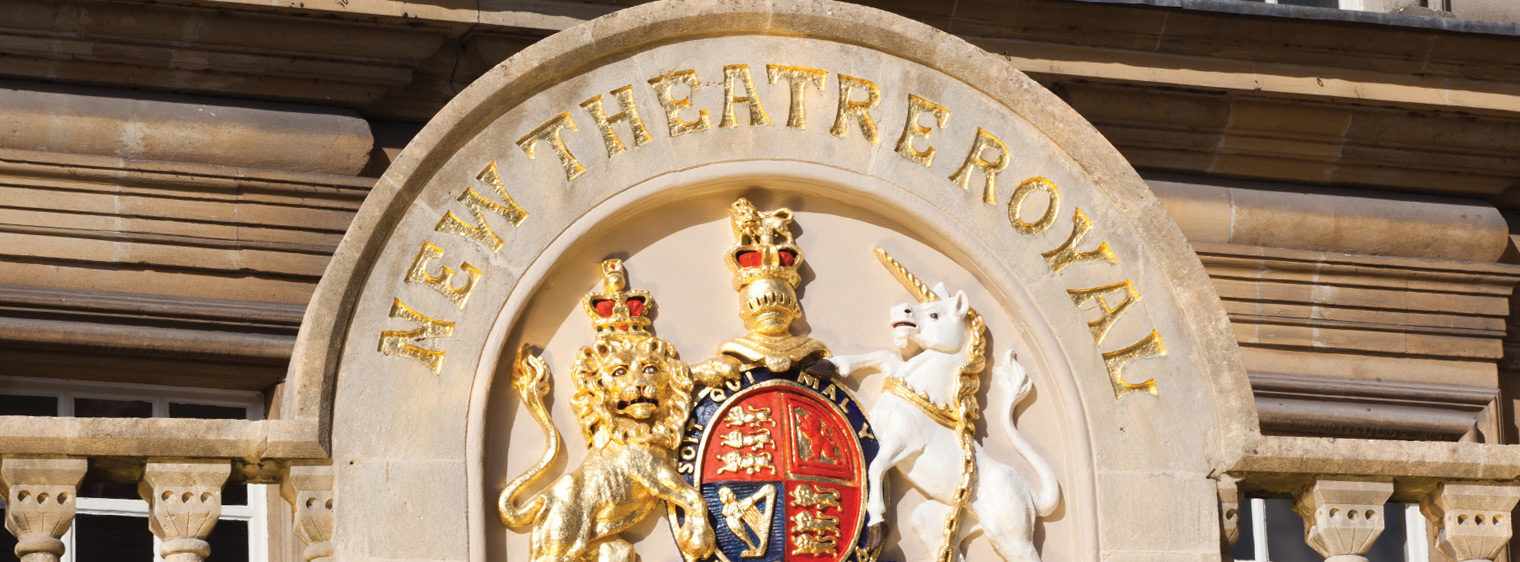
Built on its current site in 1805, the Theatre Royal Bath is one of the oldest working theatres in the country.
1805 - The original Theatre Royal – the Orchard Street Theatre – closed, to be converted into a Catholic church in 1809. Today it is a Masonic Hall.
Just one year from its conception, the new building on Sawclose was completed. It was designed by George Dance, professor of architecture at the Royal Academy. The Theatre opened on 12th October 1805 with a performance of RICHARD III.
1820 – 1850 Attendance and ticket sales at the Theatre declined, closure was threatened on several occasions.
1862 On the 18th April the Theatre was destroyed by fire. Plans were immediately made to build a new theatre on the old site.
1863 The new Theatre opened in March. It was designed by C J Phipps. A Midsummer Night’s Dream was performed on the opening night with Ellen Terry playing Titania.
1902 Since the Royal Patent had expired, the theatre was obliged to undergo extensive refurbishments to get it re-instated. These included the installation of a fire-proof curtain, additional entrances and a staircase. The Royal Patent was renewed with the approval of the Lord Chamberlain.
1905 The Theatre’s centenary year. Henry Irving made his farewell performance.
1914 – Plans were made for extensive structural repairs. These were postponed due to the outbreak of the First World War.
1940 – 1945 – The Theatre Royal thrived during the Second World War, surviving the extensive bombing of Bath during the blitz.
1979 – The Theatre was purchased by Jeremy Fry to be run as a non-profitmaking concern – a registered charity.
1980 – An appeal was launched to raise funds for much needed renovations. Peter Hall, then director of the National Theatre, announced plans to make Bath the National’s base for middle-scale productions, once the work was completed. It was estimated that the work would cost around £1.8 Million.
1981 – The curtain came down in June on Joan Plowright and Paul Eddington in the National Theatre’s production of Who’s Afraid of Virginia Woolf? Renovation work began.
1982 30th November – The Theatre Royal re-opened after a complete renovation of backstage facilities, new fly tower and lighting system under the guidance of architect Donald Armstrong. International theatre designer Carl Toms gave his services to transform the auditorium. The re-opening gala performance, attended by Princess Margaret, was A Midsummer Night’s Dream, as it had been in 1863. The cast of this Royal National Theatre production included Paul Scofield, Susan Fleetwood, Marsha Hunt, Jack Shepherd and Tony Haygarth.
1989 – Peter Ustinov presented a fundraising evening for what was to become the Ustinov Studio.
1997 – The Ustinov Studio Theatre opens with a gala performance of A Grand Knight Out, spearheaded by Sir Peter Ustinov. The new theatre was funded by the Ustinov Appeal and the National Lottery and designed by John and Elizabeth Bury. Danny Moar was appointed Director of the Theatre Royal Bath.
1998 – The first Bath Shakespeare Festival was staged
1999 July 17th – The curtain came down on Private Lives, a Royal National Theatre production starring Juliet Stevenson and Anton Lesser. Refurbishment of the Theatre’s auditorium and technical facilities began.
1999 August 17th – The Theatre reopened after the installation of new seating, the strengthening of the balcony floors and a new lighting board. The curtain came up on The Triumph of Love, an Almeida Theatre Company production. The cast includes Helen McCrory and Tony Haygarth (who had appeared in A Midsummer Night’s Dream in 1982!)
2003 – The first Peter Hall Company Season took place.
2005 12th October – The Theatre Royal celebrated its 200th anniversary with a Theatre Royal Bath Production of Sheridan’s The Rivals starring Stephanie Cole and George Baker.
2005 23rd October – The brand new egg theatre for children and young people opened to the public for the first time.
2006 2nd December – The curtain came down on the Ustinov Studio’s own production of Outlying Islands, and the Studio closed for a year-long refurbishment.
2008 February – The Ustinov Studio reopened with its own production of Breakfast With Mugabe. Radically redesigned, the new Ustinov included a welcoming new bar and foyer area, improved access facilities, a new seating level in the auditorium and improved backstage facilities.
2010 3rd July – curtain came down on the Classical Opera Company’s production of Mozart’s Zaide. The Main House closed for complete refurbishment which included an expanded foyer, the decoration of all public areas, the improvement of the air conditioning, a lift was installed in the foyer, lighting and electrical systems were replaced to improve the Theatre’s carbon footprint and a new Stalls Bar was created in one of the original vaults.
2010 7th September – The curtain rose again on The Rivals in a production directed by Peter Hall and starring Penelope Keith and Peter Bowles.
2011 14th September – The Ustinov Studio stages its first season of UK premieres under new Artistic Director Laurence Boswell.
2012 5th July – The Theatre Royal mounts its first Summer Season – three outstanding new in-house productions overseen by leading guest directors. The plays are Sheridan’s The School For Scandal, Terry Johnson’s Hysteria and Shakespeare’s The Tempest.
2016 – TRB Productions has three shows, originally produced at the Ustinov Studio – The Father, Bad Jews and The Mother – running concurrently in the West End. Kenneth Cranham wins the Olivier Award for Best Actor for his performance in the Ustinov’s The Father. In the summer, the Main House underwent a major seating refurbishment.
2017 – Jonathan Church was appointed Artistic Director of the Theatre’s Summer Season. His first season included Racing Demon, North by Northwest, The Lady in the Van and, in the Ustinov Studio, the world premiere of Looking at Lucian.
2018 – Plays in the second Jonathan Church Summer Season were An Ideal Husband, The Price, God of Carnage and, in the Ustinov Studio, the UK premiere of Switzerland and In Praise of Love and Henry V.
2019 – New box office system – Spektrix – is installed.
2020 – Along with theatres around the country, the Theatre Royal Bath was closed due to the pandemic from 16 March. The Main House was one of the first theatres in the country to reopen when in September the curtain rose on a production of Betrayal by Harold Pinter, directed by Jonathan Church. The WELCOME BACK season of plays continued through the Autumn, with performances of Oleanna in the Ustinov Studio and The Play That Goes Wrong over the Christmas period, all playing to socially distanced audiences.
2021 – Following the third national lockdown, the Theatre Royal Bath was once again one of the first regional theatres in the UK to reopen with Ralph Fiennes performing Four Quartets. The Theatre Royal Bath received a third grant from the Culture Recovery Fund to ensure that performances could continue throughout 2021.
2022 – Deborah Warner is announced as the new Artistic Director of the Ustinov Studio. Her inaugural season launches in July with a production of The Tempest, and includes later productions of Phaedra, Minotaur, Dido & Aeneas and Showmanism! Deborah's final production, The Birthday Party starring Jane Horrocks, took place in August 2024.
2025 - the Ralph Fiennes / Theatre Royal Bath Season saw the legendary actor star in two plays, Grace Pervades and Small Hotel, and direct a third, As You Like It, over a five month period in the Main House.